

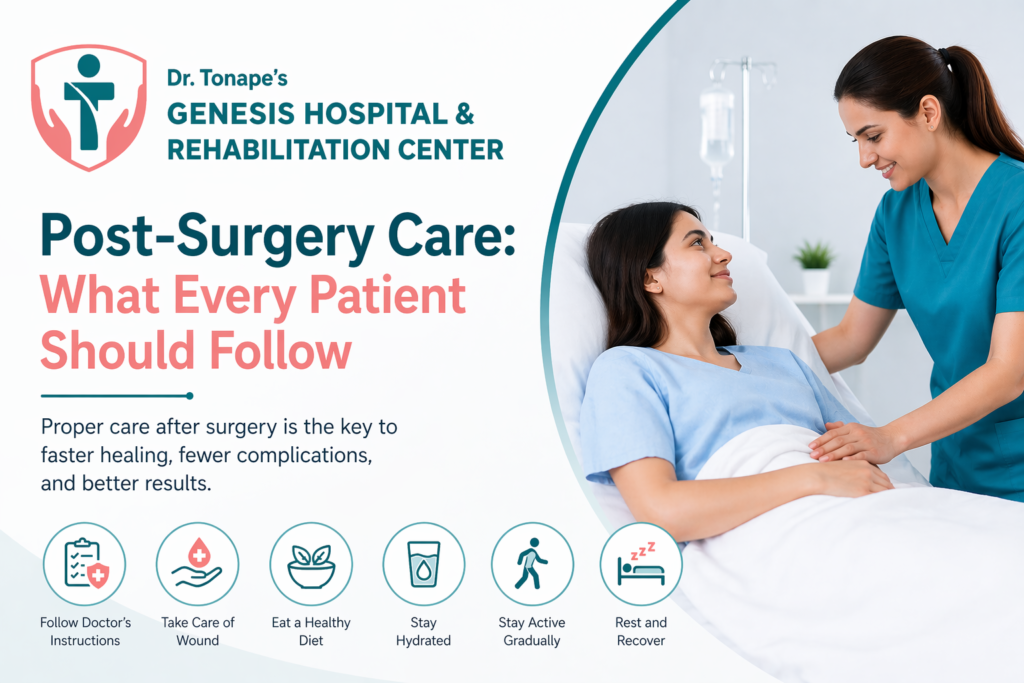
Recovering after surgery is just as important as the procedure itself. Many patients believe that once the surgery is done, the hard part is over—but in reality, post-surgery care plays a crucial role in healing, preventing complications, and ensuring long-term success. Whether it’s a minor procedure or a major operation, how you take care of your body afterward can significantly impact your recovery speed and overall health.
With guidance from experienced surgeons like Dr. Trupti Pakhare – Tonape, who brings over 17 years of expertise in advanced abdominal and breast surgeries, understanding proper post-operative care becomes easier and more effective.
Why Post-Surgery Care Matters
Think of surgery as the beginning of healing—not the end. Your body has undergone stress, and now it needs time, care, and support to recover. Proper post-surgical care helps:
- Reduce the risk of infection
- Promote faster healing
- Minimize pain and discomfort
- Prevent complications like blood clots or delayed recovery
- Improve surgical outcomes
Ignoring recovery guidelines can lead to setbacks, re-hospitalization, or even long-term health issues. That’s why following your doctor’s advice is essential.
1. Follow Your Doctor’s Instructions Carefully
Every surgery is different, and so is every recovery plan. Your surgeon will provide personalized instructions based on your condition, type of surgery, and overall health.
These instructions may include:
- Medication schedules
- Wound care guidelines
- Dietary restrictions
- Activity limitations
It might feel overwhelming at first, but sticking to these instructions is one of the most important steps in recovery. If something isn’t clear, don’t hesitate to ask your doctor.
2. Take Proper Care of Your Surgical Wound
Your surgical wound needs special attention to avoid infections and ensure proper healing. Keep the area clean and dry, and follow dressing instructions as advised.
Watch out for warning signs such as:
- Redness or swelling
- Unusual discharge
- Foul smell
- Increased pain
If you notice any of these, contact your doctor immediately. Early intervention can prevent serious complications.
3. Manage Pain Effectively
Pain after surgery is normal, but it should be manageable. Your doctor may prescribe pain relief medications to help you stay comfortable.
Don’t try to “tough it out.” Proper pain management:
- Helps you rest better
- Allows you to move more easily
- Speeds up recovery
At the same time, avoid self-medicating or taking additional drugs without consulting your doctor.
4. Maintain a Healthy Diet
Your body needs nutrients to repair tissues and regain strength. A balanced diet rich in proteins, vitamins, and minerals plays a key role in healing.
Focus on:
- Protein-rich foods (eggs, lentils, lean meat)
- Fruits and vegetables for vitamins
- Whole grains for energy
- Plenty of fluids
Avoid heavy, oily, or processed foods that may slow digestion and recovery.
5. Stay Hydrated
Water is often overlooked but extremely important. Proper hydration helps:
- Flush out toxins
- Improve digestion
- Prevent constipation (common after surgery)
- Support overall healing
Aim to drink enough water throughout the day unless your doctor advises otherwise.
6. Gradually Resume Physical Activity
Rest is important, but complete inactivity can slow down recovery. Light movement improves blood circulation and reduces the risk of complications like blood clots.
Start with:
- Short walks
- Gentle stretching (if allowed)
Avoid heavy lifting or strenuous activities until your doctor gives clearance. Recovery is a gradual process—don’t rush it.
7. Get Enough Rest and Sleep
Your body heals the most when you’re resting. Quality sleep helps repair tissues and boosts your immune system.
Create a comfortable sleeping environment and try to:
- Maintain a regular sleep schedule
- Avoid screen time before bed
- Use supportive pillows if needed
Listening to your body is key—rest when you feel tired.
8. Watch for Warning Signs
Even with proper care, complications can sometimes occur. Be alert for symptoms like:
- Fever
- Severe pain
- Persistent vomiting
- Difficulty breathing
- Sudden swelling
If you experience any of these, seek medical attention immediately.
9. Attend Follow-Up Appointments
Follow-up visits are not optional—they are essential. Your doctor will:
- Check your healing progress
- Remove stitches if needed
- Adjust medications
- Address any concerns
Skipping these appointments can delay recovery or allow complications to go unnoticed.
10. Mental and Emotional Well-being
Recovery isn’t just physical—it’s emotional too. Many patients experience anxiety, mood swings, or frustration during healing.
Stay positive by:
- Talking to family or friends
- Practicing relaxation techniques
- Staying engaged in light activities
A healthy mindset can significantly improve recovery outcomes.
Expert Care You Can Trust
With over 17 years of surgical experience, Dr. Trupti Pakhare – Tonape is known for delivering advanced and patient-focused care. As the Director of Genesis Hospital & Rehabilitation Centre and a consultant surgeon at Sterling Multispeciality Hospital, she combines clinical expertise with compassionate care.
Her approach emphasizes not just successful surgeries, but also safe and smooth recovery through proper post-operative guidance. Whether it’s abdominal or breast surgery, patients benefit from her deep knowledge and commitment to excellence.
Conclusion
Post-surgery care is a journey that requires patience, discipline, and the right guidance. From wound care and diet to rest and follow-ups, every step plays a role in your recovery. The goal isn’t just to heal—but to heal well.
By following expert advice and listening to your body, you can ensure a smoother, faster, and safer recovery. Remember, your health is in your hands even after you leave the operation room. Take care of it wisely.