

When surgery is recommended, one of the first questions patients ask is whether laparoscopic surgery or open surgery is safer. Both techniques are widely used and can successfully treat many medical conditions. The right choice depends on the type of operation, the patient’s health, the complexity of the condition, and the surgeon’s experience.
Patients looking for a Laparoscopic Surgeon in Pimpri-Chinchwad may hear that minimally invasive surgery offers smaller cuts and faster recovery. However, laparoscopic surgery is not suitable for every patient or every procedure. A skilled General Surgeon evaluates the complete medical situation before recommending the safest approach.
Understanding the difference between these two techniques can help patients make informed decisions and feel more confident before surgery.
What Is Laparoscopic Surgery?
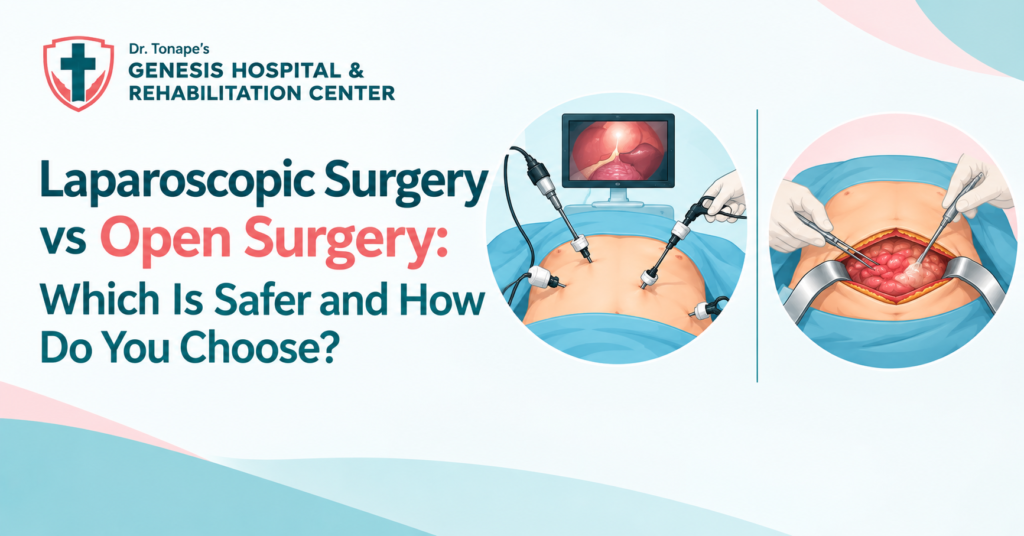
Laparoscopic surgery is also called minimally invasive surgery or keyhole surgery. Instead of making one large incision, the surgeon makes a few small cuts in the abdomen or another area of the body.
A thin instrument called a laparoscope is inserted through one of the small openings. It has a camera and light that allow the surgeon to view the internal organs on a monitor. Other surgical instruments are inserted through the remaining small incisions.
Laparoscopic surgery is commonly used for procedures such as:
- Gallbladder removal.
- Appendectomy.
- Hernia repair.
- Some bowel surgeries.
- Certain gynaecological procedures.
- Selected weight-loss surgeries.
- Some urological and diagnostic procedures.
The abdomen is often gently inflated with carbon dioxide gas to create space for the surgeon to work. General anaesthesia is commonly used, although the anaesthesia plan depends on the procedure and the patient’s health.
Benefits of Laparoscopic Surgery
Laparoscopic surgery may offer several advantages compared with traditional open surgery:
- Smaller incisions.
- Less damage to surrounding tissues.
- Reduced pain after surgery in many cases.
- Lower risk of wound infection.
- Smaller scars.
- Shorter hospital stay.
- Faster return to daily activities.
- Reduced risk of some incision-related complications.
For example, a Cochrane review comparing laparoscopic and open appendectomy found that laparoscopic surgery was associated with less postoperative pain, fewer wound infections, shorter hospital stays, and an earlier return to normal activities in adults. However, the review also reported a higher risk of intra-abdominal abscesses in some adult patients.
These benefits may vary depending on the type of surgery, the patient’s medical condition, and the experience of the surgical team.
What Is Open Surgery?
Open surgery involves making a larger incision to allow the surgeon direct access to the affected organ or body area. The size and location of the incision depend on the procedure.
Open surgery has been used for many years and remains an important treatment option. It may be required for complex, emergency, or technically difficult conditions.
Open surgery may be recommended when:
- The disease is extensive or complicated.
- There is severe infection or inflammation.
- The patient has significant internal bleeding.
- A large tumour or mass needs to be removed.
- Previous operations have caused extensive scar tissue.
- The surgeon needs direct access to major blood vessels or organs.
- Laparoscopic equipment or expertise is not available.
- The patient’s condition makes minimally invasive surgery unsuitable.
Open surgery can provide excellent visibility and access, particularly when the surgeon needs to control bleeding quickly or examine a large area.
Laparoscopic Surgery vs Open Surgery: Which Is Safer?
There is no single answer that applies to every patient. In many planned abdominal procedures, laparoscopic surgery is associated with less postoperative pain, fewer wound problems, shorter hospital stays, and faster recovery. However, open surgery may be safer when the condition is severe, the anatomy is unusual, or immediate access is required.
The safety of a procedure depends on several factors:
Type of Operation
Some procedures are routinely performed laparoscopically, while others may require open surgery. For example, laparoscopic gallbladder removal is commonly used when appropriate. However, complicated infection, severe inflammation, or unexpected anatomy may require an open approach.
Severity of the Condition
A patient with a small, uncomplicated problem may be a good candidate for laparoscopic surgery. A patient with widespread infection, severe bleeding, or advanced disease may need open surgery for better access and control.
Previous Abdominal Surgery
Previous operations can cause internal scar tissue, also known as adhesions. These adhesions may make laparoscopic surgery more difficult or increase the risk of injury. In some cases, open surgery may be recommended from the beginning.
Overall Health
Heart disease, lung disease, obesity, bleeding disorders, and other medical conditions may influence the choice of surgery. Laparoscopic procedures often involve carbon dioxide insufflation, which can affect breathing and circulation in certain patients.
Surgeon’s Experience
The surgeon’s training and experience are important factors in both laparoscopic and open surgery. Research has shown that outcomes in laparoscopic procedures can be influenced by the surgeon’s experience and the number of similar operations performed.
Patients should ask whether the surgeon regularly performs the recommended procedure and whether the hospital has the required equipment and emergency support.
Risks of Laparoscopic Surgery
Although laparoscopic surgery is often associated with faster recovery, it is not risk-free. Possible complications include:
- Bleeding.
- Infection.
- Injury to blood vessels or nearby organs.
- Anaesthesia-related complications.
- Blood clots.
- Internal bleeding.
- Hernia at an incision site.
- Problems related to carbon dioxide gas.
- Need to convert to open surgery.
Sometimes a laparoscopic operation must be changed into an open operation. This is called conversion. It may be necessary if the surgeon finds unexpected anatomy, severe infection, uncontrolled bleeding, extensive scar tissue, or a condition that cannot be safely treated through small incisions.
Conversion is not necessarily a failure. It is often a safety decision made to protect the patient.
Risks of Open Surgery
Open surgery also carries risks, which may include:
- More postoperative pain.
- Larger scars.
- Higher risk of wound infection.
- Longer hospital stay.
- Slower recovery.
- Incisional hernia.
- Greater impact on abdominal muscles and tissues.
- Blood clots and other general surgical complications.
However, open surgery can be the most appropriate option for certain complex conditions. A larger incision may allow the surgeon to control bleeding, remove extensive disease, or safely repair damaged organs.
How Do You Choose the Right Surgical Approach?
The decision should be made after a detailed consultation, examination, and review of diagnostic reports. Important questions to discuss with your surgeon include:
- What condition needs to be treated?
- Is laparoscopic surgery suitable for my specific case?
- What are the benefits and risks of both approaches?
- Could the operation need to be converted to open surgery?
- How long might hospitalisation and recovery take?
- What type of anaesthesia will be used?
- What complications should I watch for after surgery?
- How experienced is the surgeon with this procedure?
- Are there any health conditions that increase my surgical risk?
- What happens if the planned approach is not safe during the operation?
Patients should not choose surgery based only on scar size or recovery time. The safest method is the one that provides effective treatment with the lowest reasonable risk for the individual patient.
Recovery After Laparoscopic and Open Surgery
Recovery varies according to the procedure and the patient’s health. After laparoscopic surgery, many patients return to light activities sooner, although tiredness and discomfort may continue for several days or weeks.
Open surgery may require a longer recovery period because the incision is larger and more tissues are affected. Patients may need additional support with movement, wound care, lifting restrictions, and daily activities.
After either type of surgery, patients should:
- Follow wound-care instructions.
- Take prescribed medicines correctly.
- Walk regularly as advised.
- Avoid heavy lifting until permitted.
- Maintain adequate hydration and nutrition.
- Attend follow-up appointments.
- Seek help for fever, worsening pain, persistent vomiting, wound discharge, breathing difficulty, or unusual swelling.
Conclusion
Laparoscopic surgery often offers smaller incisions, less pain, fewer wound problems, and faster recovery for suitable patients. Open surgery remains an essential and sometimes safer option for complex, emergency, or advanced conditions. The best approach depends on the diagnosis, surgical difficulty, overall health, available facilities, and the surgeon’s expertise.
Dr. Trupti Tonpe provides personalised surgical guidance and helps patients understand their treatment options before surgery. Through careful evaluation, clear communication, and an individualised surgical plan, patients can make informed decisions about laparoscopic or open procedures. Consult Dr. Trupti Tonpe when seeking an experienced General Surgeon in Pimpri-Chinchwad.
#LaparoscopicSurgery #OpenSurgery #GeneralSurgery #MinimallyInvasiveSurgery #LaparoscopicSurgeon #SurgicalCare #PatientAwareness #DrTruptiTonpe