

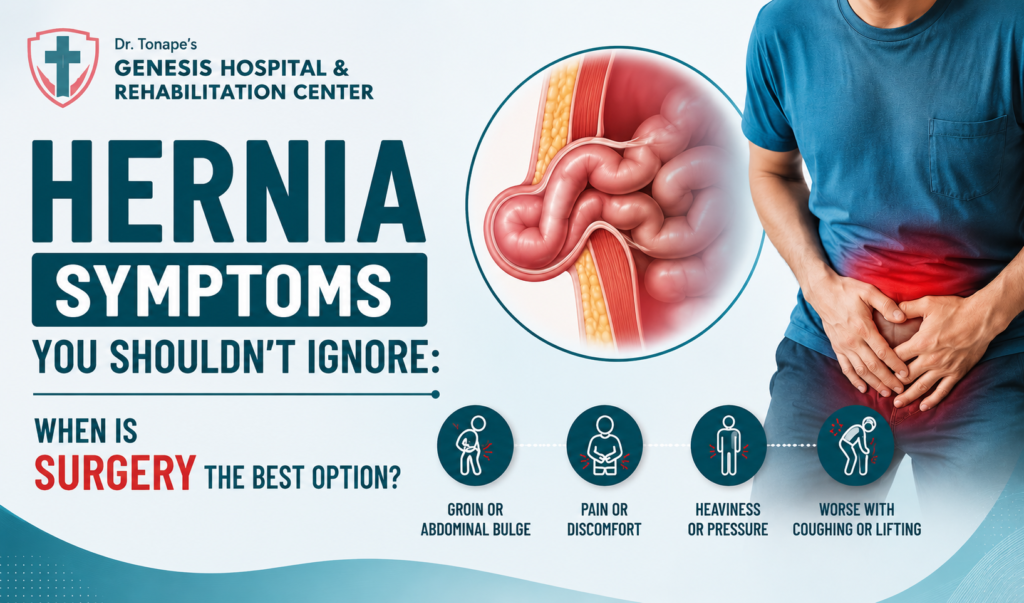
A hernia can begin with something as simple as a small bulge or mild discomfort that appears while standing, coughing or lifting something heavy. Because the symptoms may not seem serious at first, many people delay getting them checked. However, a hernia does not usually repair itself on its own, and symptoms can gradually become more noticeable.
If you are consulting a Breast Surgeries Specialist in Pimpri-Chinchwad, you may also want to understand when a hernia requires evaluation by a General Surgeon. Knowing the warning signs can help you seek treatment at the right time and reduce the risk of complications.
What Is a Hernia?
A hernia occurs when an internal organ or tissue pushes through a weakened area in the surrounding muscle or connective tissue. The abdominal wall is designed to hold internal organs in place, but weakness in this wall can allow tissue to protrude through it.
Hernias can develop in different parts of the body, with abdominal and groin hernias being among the most common.
Some common types include:
- Inguinal hernia: Develops in the groin and is particularly common in men.
- Umbilical hernia: Occurs near the belly button.
- Incisional hernia: Develops at or near a previous surgical incision.
- Femoral hernia: Occurs in the upper thigh or groin and is more common in women.
- Hiatal hernia: Occurs when part of the stomach moves through an opening in the diaphragm.
The symptoms and treatment approach can vary depending on the type, size and location of the hernia.
What Are the Common Symptoms of a Hernia?
The most recognizable sign of many abdominal or groin hernias is a visible or noticeable lump. The bulge may become more prominent when you stand, cough, sneeze or strain and may become less noticeable when you lie down.
Some people experience little or no discomfort initially, while others may have pain or pressure around the affected area.
Common symptoms can include:
- A visible or noticeable bulge in the abdomen, groin or near a previous surgical site.
- Pain, pressure or discomfort that becomes worse while coughing, lifting or exercising.
- A feeling of heaviness or pulling in the affected area.
- Burning or aching around the bulge.
- Increasing difficulty performing activities that involve physical exertion.
A hernia may remain relatively small for a long time, but that does not mean it should automatically be ignored. If you notice a new lump or persistent discomfort, a consultation with a General Surgeon can help determine whether a hernia is present and whether treatment is required.
Why Does a Hernia Happen?
Hernias can develop because of a combination of muscle weakness and increased pressure inside the abdomen.
Factors that may contribute include:
- Heavy lifting or repeated physical strain
- Chronic coughing or frequent sneezing
- Long-term constipation and straining during bowel movements
- Obesity or increased abdominal pressure
- Pregnancy
- Previous abdominal surgery
- Age-related weakening of abdominal tissues
- A family history of hernias
Sometimes, a person may have an underlying weakness in the abdominal wall that becomes noticeable only after increased pressure or physical strain.
It is important to remember that having one or more risk factors does not necessarily mean that a person will develop a hernia.
Can a Hernia Heal on Its Own?
In most cases, a hernia does not permanently disappear without treatment. Some small hernias may cause few symptoms and can sometimes be monitored under medical guidance, but the underlying weakness in the abdominal wall generally remains.
Your doctor may recommend observation in selected situations, particularly when the hernia is small and does not cause significant symptoms. However, increasing pain, enlargement of the bulge or changes in the hernia should prompt another medical assessment.
A General Surgeon can evaluate the size and location of the hernia, your symptoms and your overall health before recommending whether monitoring or surgery is more appropriate.
Hernia Symptoms You Shouldn’t Ignore
While many hernias are not immediately dangerous, certain symptoms can indicate that the protruding tissue has become trapped or that its blood supply may be compromised. These situations can require urgent medical attention.
Seek prompt medical evaluation if you experience:
- Sudden or severe pain: A sudden increase in pain around the hernia may indicate a complication.
- A bulge that becomes firm or tender: If the lump becomes hard, very painful or cannot be pushed back in when it previously could, it should be assessed promptly.
- Nausea or vomiting: These symptoms can occur when a hernia contributes to intestinal obstruction.
- Abdominal swelling or difficulty passing stool or gas: These can be warning signs of bowel obstruction.
- Changes in the skin over the hernia: Redness, darkening or significant tenderness around the bulge can be concerning.
A painful hernia accompanied by vomiting, abdominal swelling or inability to pass stool or gas should not be treated as a routine problem. Urgent medical assessment is important.
When Is Hernia Surgery the Best Option?
Surgery is the definitive treatment for a symptomatic hernia because it repairs the weakened area of the abdominal wall.
However, not every person with a hernia needs immediate surgery. The decision depends on several factors, including the type and size of the hernia, symptoms, overall health and risk of complications.
Surgery may be recommended when:
- The hernia causes persistent or increasing pain.
- The bulge is getting larger.
- The hernia interferes with work, exercise or everyday activities.
- The hernia cannot be comfortably reduced.
- There are concerns about obstruction or compromised blood supply.
- The risk of complications is considered significant.
For some people with very mild symptoms, careful monitoring may be an option. Your surgeon can explain the advantages and limitations of waiting compared with elective repair.
What Happens During Hernia Surgery?
Hernia repair involves returning the protruding tissue to its appropriate position and strengthening the weakened area of the abdominal wall.
Depending on the type and location of the hernia, surgery may be performed using an open approach or minimally invasive techniques.
In many cases, a surgical mesh may be used to reinforce the weakened abdominal wall and reduce the risk of recurrence. The exact technique depends on the patient’s condition, hernia type, size and other medical factors.
A General Surgeon will assess these factors and recommend the most appropriate surgical approach.
Open Surgery vs Minimally Invasive Hernia Repair
Both open and minimally invasive hernia repair can be effective. The choice is not simply about choosing the newest technique. It depends on the individual patient and the type of hernia.
Open repair generally involves an incision directly over the hernia. Minimally invasive repair uses smaller incisions and specialized instruments to access and repair the affected area.
Minimally invasive approaches may offer benefits such as smaller incisions and potentially faster recovery in appropriately selected patients. However, they may not be suitable for every patient.
Your surgeon can explain which technique is appropriate based on your specific condition.
What Is Recovery Like After Hernia Surgery?
Recovery depends on the type of repair, the location and size of the hernia, the surgical technique and the patient’s general health.
Many people can gradually return to normal daily activities after surgery, but strenuous exercise and heavy lifting may need to be restricted temporarily.
Following your surgeon’s instructions is important. Trying to return to heavy physical activity too quickly can interfere with recovery.
Patients should also pay attention to symptoms such as increasing pain, fever, wound redness, swelling or discharge and report concerning changes to their healthcare team.
Can Hernias Come Back After Surgery?
Hernia repair is generally effective, but recurrence is possible.
The risk can be influenced by factors such as the type and size of the hernia, surgical technique, tissue quality, smoking, obesity, wound complications and activities that place excessive strain on the repaired area.
Maintaining a healthy weight, avoiding smoking and following postoperative instructions can support recovery and may help reduce certain risk factors.
Should You Wait Until a Hernia Becomes Painful?
Not necessarily.
Some hernias cause very little discomfort, while others gradually become more painful or restrictive. Waiting until symptoms become severe is not always the best approach.
If you have noticed a persistent lump, particularly one that becomes more prominent with coughing or physical activity, getting it evaluated can provide clarity. Early assessment allows you to understand the condition and discuss whether monitoring or planned surgical repair is appropriate.
Don’t Ignore a Hernia That Is Changing
A small, painless bulge may seem harmless, but changes in size, pain or appearance should not be ignored. Hernias can remain stable for some time, but they can also become progressively symptomatic.
The most important step is to get an accurate diagnosis rather than assuming that every abdominal or groin lump is a hernia.
A consultation with a General Surgeon can help determine the type of hernia, assess potential risks and explain the available treatment options.
Consult Dr. Trupti Tonape for Expert Surgical Care
If you have noticed a new abdominal or groin bulge, persistent discomfort or symptoms that may indicate a hernia, Dr. Trupti Tonape can provide professional evaluation and guidance. A detailed assessment can help determine whether observation, lifestyle measures or surgical repair is appropriate for your condition.
If you are searching for a General Surgeon in Pimpri-Chinchwad, Dr. Trupti Tonape can help you understand your diagnosis and treatment options. Timely evaluation is particularly important if you experience increasing pain, a firm or tender bulge, vomiting, abdominal swelling or difficulty passing stool or gas.
Do not ignore a hernia simply because the symptoms appear manageable. Understanding the condition early can help you make an informed decision about treatment and protect your health.
Hashtags
#Hernia #HerniaTreatment #HerniaSurgery #GeneralSurgeon #HerniaRepair #LaparoscopicSurgery #AbdominalHealth #SurgicalCare #HealthAwareness