

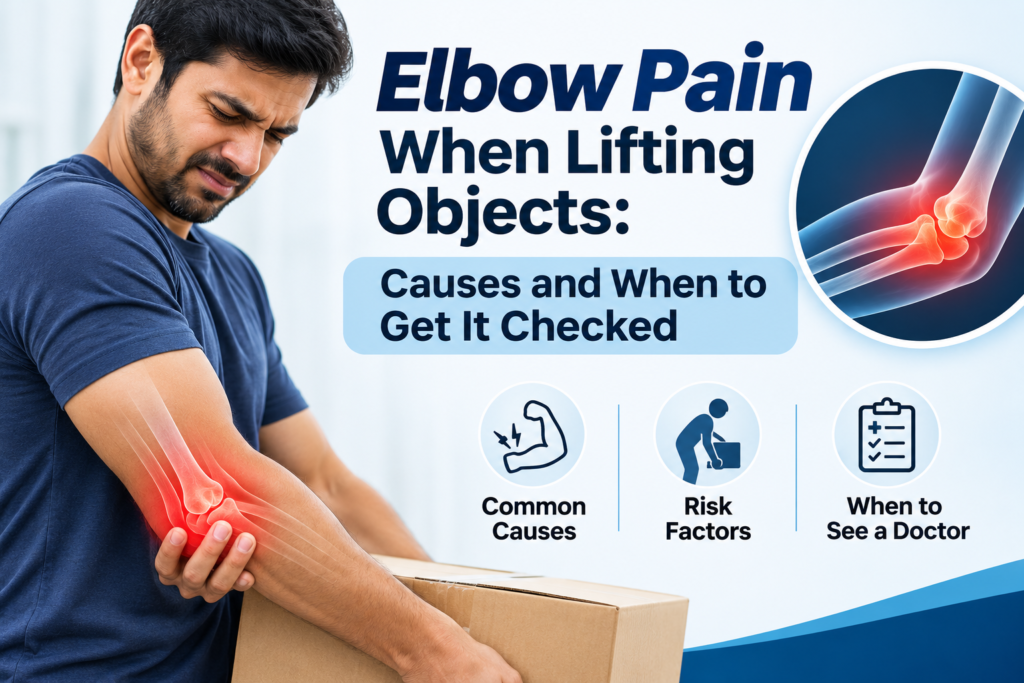
Does your elbow hurt when lifting a water bottle, carrying a shopping bag or picking up something from the floor? You may notice discomfort when gripping objects, bending your arm or straightening it after a long day. Sometimes, the pain starts gradually and becomes more noticeable with repeated movements.
Elbow pain can affect people who perform physical work, spend long hours using a computer, play sports or regularly lift heavy objects. It may be caused by muscle strain, tendon irritation, joint problems or an injury.
If you are looking for an elbow pain doctor in PCMC, understanding the possible causes and knowing when to seek medical advice can help you take the right next step.
Why Does Your Elbow Hurt When Lifting Objects?
The elbow connects the upper arm with the forearm and allows you to bend, straighten and rotate your arm. Several muscles and tendons around this joint help you grip, lift and carry objects.
Repeated movements, excessive pressure or an injury can affect these structures and cause pain.
The location of the pain, the activities that trigger it and other symptoms can help an orthopaedic doctor identify the possible cause.
Common Causes of Elbow Pain
1. Tennis Elbow
Tennis elbow, also known as lateral epicondylitis or lateral elbow tendinopathy, affects the tendons attached to the outer part of the elbow.
Despite its name, you do not need to play tennis to develop this condition. It can occur in people who repeatedly grip, twist, lift or use their hands during work.
Common symptoms include:
- Pain on the outer side of the elbow.
- Discomfort when lifting a cup or bag.
- Pain while gripping or holding objects.
- Weakness when carrying items.
- Tenderness around the outer elbow.
The pain may develop gradually and become worse with repeated use of the arm.
2. Golfer’s Elbow
Golfer’s elbow affects the tendons on the inner side of the elbow. It is commonly associated with repeated wrist bending, gripping and forearm movements.
You may experience:
- Pain on the inner side of the elbow.
- Discomfort while carrying or lifting objects.
- Pain when bending your wrist.
- Tenderness around the inner elbow.
- Weakness while gripping.
This condition can affect people who do not play golf or any other sport.
3. Muscle or Tendon Strain
Lifting something heavier than usual or suddenly increasing physical activity can strain the muscles and tendons around the elbow.
Pain may begin during the activity or shortly afterwards. Depending on the severity, you may also notice tenderness, swelling or discomfort when moving your arm.
4. Elbow Bursitis
A small fluid-filled sac called a bursa helps reduce friction around the elbow joint. When this sac becomes inflamed, the condition is known as elbow bursitis.
Common signs include:
- Swelling at the back of the elbow.
- Tenderness when touching the affected area.
- Discomfort when bending or resting the elbow.
- Visible swelling near the elbow tip.
If the swelling is red, hot or accompanied by fever, seek prompt medical attention because an infection may be present.
5. Elbow Joint Arthritis
Arthritis can affect the elbow and cause pain, stiffness and reduced movement. You may notice discomfort when bending or straightening your arm, particularly after periods of inactivity.
Some people also experience swelling or a grinding sensation during movement.
6. Nerve Compression Around the Elbow
Nerves passing around the elbow can become compressed or irritated. One example is cubital tunnel syndrome, which affects the ulnar nerve.
Possible symptoms include:
- Tingling in the ring and little fingers.
- Numbness in the hand.
- Pain around the inner elbow.
- Weakness while gripping objects.
- Symptoms that become worse when the elbow remains bent for a long time.
Nerve-related symptoms need proper assessment because they may require a different treatment approach from muscle or tendon problems.
Symptoms of Elbow Pain You Should Not Ignore
Elbow pain does not always feel the same. Some people experience pain only while lifting objects, while others notice discomfort even when the arm is resting.
Pay attention to these symptoms:
- Pain that continues for several days or keeps returning.
- Difficulty lifting everyday objects.
- Swelling around the elbow joint.
- Stiffness when bending or straightening the arm.
- Reduced grip strength.
- Tingling or numbness in the fingers.
- Pain that gradually becomes worse.
Seek urgent medical attention if you experience severe pain after an injury, an obvious deformity, an inability to move your arm or a hot, red and swollen elbow with fever.
How Is Elbow Pain Diagnosed?
An orthopaedic doctor will usually ask when the pain started, which activities make it worse and whether you have experienced any recent injury.
The physical examination may include:
- Checking the location of tenderness.
- Assessing how comfortably you bend and straighten your elbow.
- Checking wrist and forearm movements.
- Testing grip strength.
- Looking for swelling or signs of inflammation.
- Checking for possible nerve-related symptoms.
Depending on the examination, the doctor may recommend an X-ray to assess the bones and joint. Ultrasound or MRI may be considered if a tendon, ligament or other soft-tissue problem is suspected.
Not everyone with elbow pain needs an X-ray or MRI. The choice of investigation depends on the symptoms and examination findings.
Elbow Pain Treatment: What Are Your Options?
Treatment depends on the underlying cause, how severe the pain is and how long you have been experiencing it. Many elbow conditions improve with non-surgical treatment.
1. Rest and Activity Modification
If lifting or repetitive movements are making your elbow hurt, temporarily reduce those activities.
This does not always mean keeping your arm completely still. Gentle movement may help maintain flexibility, depending on the condition.
Avoid repeatedly performing movements that cause sharp or increasing pain.
2. Cold Packs
A cold pack wrapped in a towel may help reduce discomfort after activity. Apply it for around 10–15 minutes.
Do not place ice directly on your skin.
3. Medication for Pain Relief
A doctor may recommend suitable pain-relief medication after considering your symptoms and medical history.
Do not start anti-inflammatory medication without checking whether it is appropriate for you.
4. Physiotherapy
Physiotherapy may help when elbow pain is related to muscle weakness, tendon irritation or restricted movement.
Depending on the diagnosis, a physiotherapist may recommend:
- Gentle elbow and wrist movements.
- Forearm stretching exercises.
- Gradual strengthening exercises.
- Grip-strength exercises.
- Advice on lifting techniques and daily activities.
Exercises should be chosen according to the cause of pain. Starting heavy strengthening exercises too early can make some conditions worse.
5. Further Treatment
If symptoms continue despite appropriate treatment, an orthopaedic specialist may discuss additional options based on the diagnosis.
Some patients may need further investigations or specialist procedures. Surgery is considered only for selected conditions when other treatments have not provided sufficient improvement or when an injury requires surgical management.
Not every case of elbow pain requires surgery. The treatment plan should be based on the actual problem affecting the elbow.
When Should You See an Elbow Pain Doctor in PCMC?
You should consider an orthopaedic consultation if:
- Elbow pain continues despite reducing activities that aggravate it.
- You find it difficult to lift or carry everyday objects.
- Pain interferes with your work or household activities.
- You notice persistent swelling or stiffness.
- Your grip strength is becoming weaker.
- You experience tingling or numbness in your fingers.
- The pain keeps returning after temporary relief.
Getting the cause checked is important because tendon problems, joint conditions and nerve compression may require different treatments.
Where Can You Get Elbow Pain Checked in Pimpri-Chinchwad?
Elbow pain can affect your ability to work, exercise and manage everyday activities. If the discomfort continues or makes lifting objects difficult, an orthopaedic assessment can help identify the problem.
Genesis Hospital and Rehabilitation Center is located in Pimpri Colony, Pimpri-Chinchwad, Pune. Patients from Pimpri, Chinchwad, Akurdi, Nigdi and nearby areas can enquire about the hospital’s orthopaedic services.
If you are searching for an elbow pain doctor in PCMC, you can explore the hospital’s Orthopaedic Services and learn more about Dr. Prashant Tonape. His professional profile includes elbow arthroscopy among his areas of specialisation.
For consultation and appointment enquiries, visit the Genesis Hospital Contact Page or call +91 95526 50900.
Arrange a consultation if elbow pain persists, becomes worse or starts limiting your daily activities.
Frequently Asked Questions
1. Why does my elbow hurt when I lift something?
Elbow pain during lifting may be related to tendon irritation, muscle strain, tennis elbow, golfer’s elbow or joint problems. The exact cause depends on the location of pain and other symptoms.
2. Can tennis elbow happen without playing tennis?
Yes. Tennis elbow can develop due to repeated gripping, lifting, twisting or wrist movements. People who perform repetitive tasks at work may also experience it.
3. Should I stop lifting weights if my elbow hurts?
If lifting weights increases your pain, reduce or temporarily stop the activity. Avoid pushing through sharp or worsening pain. A doctor or physiotherapist can advise when and how to resume exercise.
4. When should I see a doctor for elbow pain?
See a doctor if the pain continues, becomes worse, affects your grip or makes everyday activities difficult. Swelling, numbness and restricted movement also need medical assessment.
5. Can elbow pain improve without surgery?
Yes. Many cases improve with activity modification, appropriate medication and physiotherapy. Surgery is needed only for selected conditions when other treatments have not worked or when the injury requires surgical management.
6. Where can I get elbow pain checked in PCMC?
You can contact Genesis Hospital and Rehabilitation Center in Pimpri-Chinchwad, Pune, to enquire about an orthopaedic consultation.
Conclusion
Elbow pain while lifting objects can make simple tasks such as carrying shopping bags, picking up household items and working with your hands uncomfortable. It may be caused by tendon irritation, muscle strain, arthritis or nerve-related problems.
Do not ignore pain that keeps returning or affects your ability to use your arm. An orthopaedic assessment can help identify the cause and determine whether medication, physiotherapy or another treatment is needed.
For patients in Pimpri-Chinchwad and nearby areas of Pune, Genesis Hospital and Rehabilitation Center can be contacted for an orthopaedic review.
Medical Disclaimer: This article is for general educational purposes only. It does not replace medical advice, diagnosis or treatment from a qualified healthcare professional.