

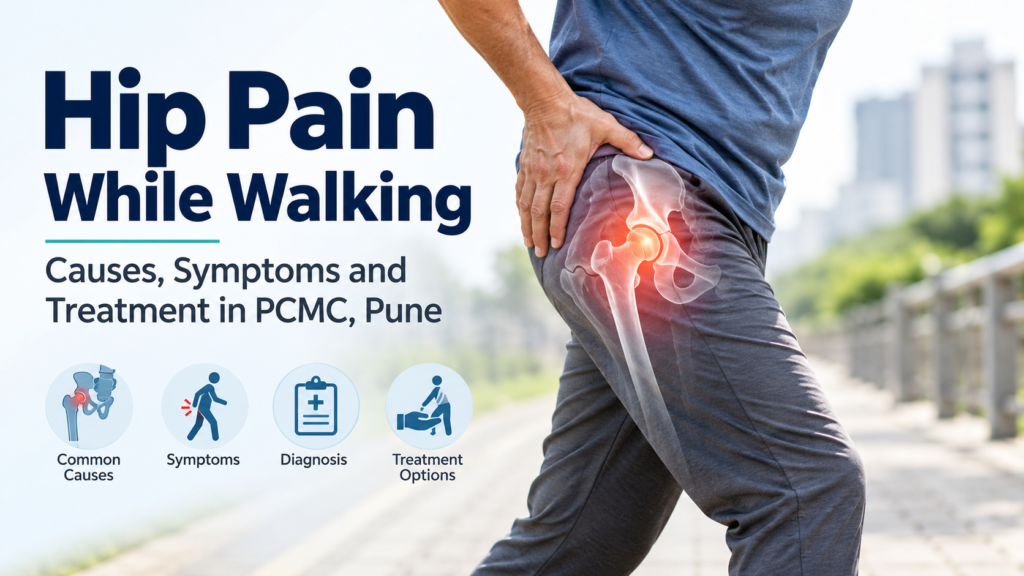
Hip Pain While Walking: Causes, Symptoms and Treatment in PCMC, Pune
Hip pain while walking can make everyday activities such as climbing stairs, getting out of bed or standing for long periods difficult. Some people feel pain in the groin, while others experience discomfort on the outer side of the hip or in the buttock. The pain may develop gradually or begin after a fall, injury or physical activity.
If you are looking for hip pain treatment in Pimpri-Chinchwad, Pune, understanding the possible causes can help you decide when to seek medical advice. Treatment depends on the source of the pain, the severity of symptoms and how much your daily activities are affected.
What Causes Hip Pain While Walking?
The hip joint supports body weight and helps the legs move during walking, sitting and standing. Problems affecting the joint, muscles, tendons or surrounding structures can cause pain and restrict movement.
1. Hip Osteoarthritis
Hip osteoarthritis occurs when the cartilage that protects the joint gradually wears down. It can cause pain, stiffness and difficulty moving the leg. The discomfort may become more noticeable while walking, climbing stairs or getting up after sitting for a long time.
An orthopaedic specialist can assess persistent symptoms and determine whether osteoarthritis or another condition is responsible. Genesis Hospital provides orthopaedic services in Pimpri-Chinchwad for patients seeking assessment of musculoskeletal problems.
2. Muscle Strain and Tendon Problems
Sudden movements, strenuous exercise or repeated physical activity can strain the muscles and tendons around the hip. This may cause pain when walking, lifting the leg or changing position.
The appropriate treatment depends on the affected tissue and the severity of the injury. Pain that persists or interferes with walking should be assessed by a healthcare professional.
3. Hip Bursitis
Bursae are small, fluid-filled sacs that reduce friction between tissues around a joint. Inflammation around the outer hip can cause tenderness and pain while walking, climbing stairs or lying on the affected side.
A medical examination can help distinguish bursitis from other conditions that cause similar symptoms.
4. Hip Labral Tear
The labrum is a ring of cartilage that helps support the hip socket. A tear can cause groin pain, stiffness, clicking or a catching sensation during movement.
An orthopaedic examination and, when necessary, imaging tests can help identify the problem and guide treatment.
5. Hip Injury or Fracture
A fall, road accident or direct impact can injure the hip. The risk of fracture may be higher in older adults and people with weakened bones.
Severe hip pain following an injury, inability to stand or put weight on the leg, or an obvious change in leg position requires urgent medical attention.
Where Do You Feel Hip Pain?
The location of the pain can provide useful information during a medical examination.
- Pain in the groin: May be associated with osteoarthritis or another problem inside the hip joint.
- Pain on the outer hip: Can occur with tendon problems or bursitis.
- Pain in the buttock: May come from the hip, lower back or surrounding muscles.
- Pain spreading down the leg: May be related to nerve irritation or another condition outside the hip joint.
These symptoms can overlap, so pain location alone cannot confirm the diagnosis.
When Should You See an Orthopaedic Doctor for Hip Pain?
Consider consulting an orthopaedic specialist if your hip pain:
- Continues for several days or keeps returning.
- Makes walking or climbing stairs difficult.
- Causes stiffness or reduces hip movement.
- Worsens over time or interferes with sleep.
- Develops without an obvious injury.
Seek urgent medical care if you cannot put weight on your leg after an injury, experience severe pain after a fall, or have hip pain accompanied by fever and a hot or swollen joint.
For patients looking for an orthopaedic doctor in PCMC, a timely assessment can help identify the cause and determine which treatment options may be appropriate.
How Is Hip Pain Diagnosed?
During an orthopaedic consultation, the doctor will ask about your symptoms, medical history, daily activities and any recent injury.
The examination may include checking your walking pattern, hip movement, muscle strength and areas of tenderness.
Depending on the findings, the doctor may recommend:
- X-ray: To check for fractures, changes associated with osteoarthritis and other bone problems.
- MRI: To examine cartilage, tendons, muscles or other soft tissues when necessary.
- Additional tests: If your symptoms suggest another underlying condition.
Not everyone needs an X-ray or MRI. The choice of investigation depends on the symptoms and examination findings.
Treatment for Hip Pain While Walking
Treatment depends on the cause of the pain, its severity and how much it affects daily activities.
Activity Changes
Reducing activities that make the pain worse may help. Avoid strenuous exercise or movements that cause significant discomfort until you have received appropriate advice.
Physiotherapy
A physiotherapist may recommend exercises to improve hip strength, flexibility and movement. Exercises should be selected according to the diagnosis, particularly when pain is caused by an injury or joint condition.
Medication for Pain Relief
A doctor may recommend medication when appropriate. The choice depends on your medical history, other medicines you take and the suspected cause of the pain. Avoid taking painkillers regularly without medical advice.
Further Treatment or Surgery
Some hip conditions improve with non-surgical treatment, while others may require additional procedures. Surgery is considered according to the diagnosis, severity of symptoms, expected benefits and individual risks.
In selected cases of advanced joint damage, a specialist may discuss whether joint replacement is appropriate. You can read more about the procedure on Genesis Hospital’s Joint Replacement page.
Hip replacement is not necessary for every person with hip pain. The decision depends on the condition of the joint and the effect of symptoms on everyday life.
How Can You Look After Your Hip Joints?
Although not every cause of hip pain can be prevented, certain habits may help maintain mobility and reduce unnecessary strain.
- Increase walking distance and exercise gradually.
- Wear comfortable footwear.
- Stay physically active within your comfort level.
- Follow your doctor’s advice when recovering from an injury.
- Avoid exercises that cause sharp or worsening pain.
- Seek medical advice if pain continues to affect your routine.
If you already have hip pain, ask your doctor or physiotherapist which exercises are suitable for your condition.
Hip Pain Treatment in Pimpri-Chinchwad, Pune
Persistent hip pain can affect work, household activities and your ability to move comfortably. Finding the cause is important before deciding on treatment.
Genesis Hospital & Rehabilitation Centre is located in Pimpri-Chinchwad, Pune. Patients experiencing hip pain while walking can contact the hospital to enquire about an orthopaedic consultation.
You can learn more about Dr. Prashant Tonape and the hospital’s orthopaedic services before contacting the team to discuss appointment availability.
For enquiries, visit the Genesis Hospital Contact Us page. The medical team can guide you regarding consultation arrangements and the appropriate next steps.
Frequently Asked Questions
Why does my hip hurt when I walk but not when I sit?
Some hip conditions cause pain mainly during movement or when the joint bears weight. Osteoarthritis, tendon problems and other conditions can cause this pattern. A medical assessment can help identify the cause.
Can hip pain while walking be treated without surgery?
Yes, some causes of hip pain can be managed without surgery through activity changes, physiotherapy and other appropriate treatments. The right approach depends on the underlying condition.
Should I keep walking if my hip hurts?
Avoid pushing through severe or worsening pain. Reduce activities that aggravate your symptoms and consult a doctor if the pain persists or affects your ability to walk.
Which doctor should I consult for hip pain in PCMC?
An orthopaedic specialist can evaluate hip pain, identify possible causes and recommend suitable treatment. Patients looking for an orthopaedic consultation in Pimpri-Chinchwad, Pune, can contact Genesis Hospital to enquire about appointment availability.
When does hip pain require urgent medical attention?
Severe pain following a fall, inability to bear weight, or pain accompanied by fever and a hot or swollen joint requires urgent medical assessment.
Consult an Orthopaedic Specialist in PCMC
If hip pain is affecting your walking, climbing stairs or everyday activities, do not keep ignoring the symptoms.
Contact Genesis Hospital & Rehabilitation Centre in Pimpri-Chinchwad, Pune, to enquire about an orthopaedic consultation and discuss the next steps for your hip pain.
Medical disclaimer: This article is for general information and does not replace a medical consultation. A qualified healthcare professional should assess your symptoms and recommend treatment.