

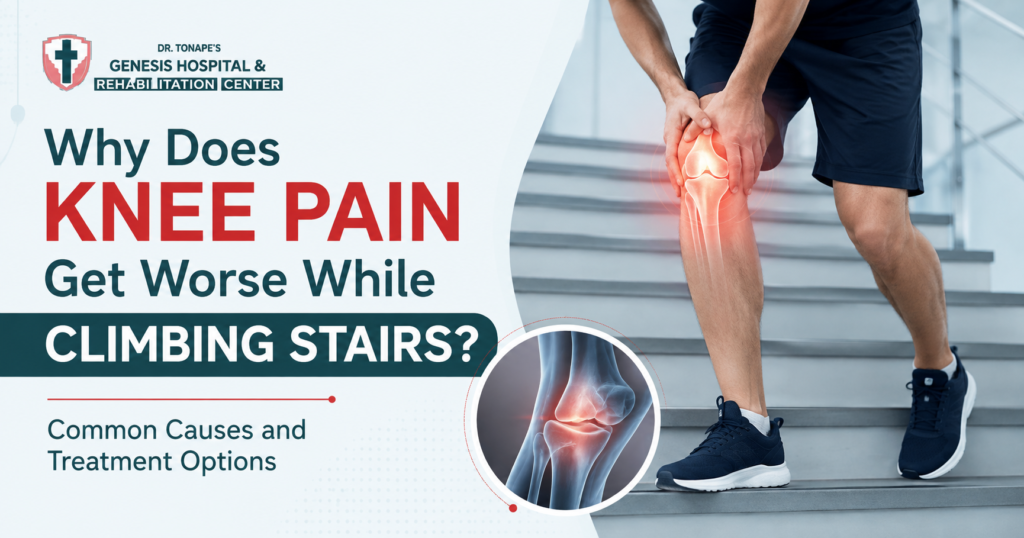
Knee pain is one of the most common orthopedic complaints among adults of all ages. While some people notice discomfort only after a long day, others experience sharp pain every time they climb or descend stairs. If you find yourself holding onto the handrail or avoiding stairs altogether, it may be a sign that your knees need medical attention.
If you are searching for a Joint Replacement Surgeon In Pimpri-Chinchwad, understanding the underlying cause of your knee pain is the first step toward effective treatment. An experienced Orthopedic surgeon can diagnose the problem early and recommend the most suitable treatment before the condition worsens.
Why Does Climbing Stairs Put More Pressure on Your Knees?
Walking on a flat surface places moderate stress on your knee joints. However, climbing stairs significantly increases the force passing through the kneecap and surrounding cartilage.
According to the American Academy of Orthopaedic Surgeons (AAOS), the knee experiences several times your body weight while climbing stairs, making existing knee problems more noticeable.
If the cartilage, ligaments, tendons, or muscles supporting the knee are damaged or weakened, this extra pressure can trigger pain.
Common Causes of Knee Pain While Climbing Stairs
Several orthopedic conditions can make stair climbing uncomfortable. Identifying the exact cause is essential because treatment varies depending on the diagnosis.
1. Patellofemoral Pain Syndrome
Often called “runner’s knee,” this condition occurs when the kneecap does not move smoothly over the thigh bone.
Common symptoms include:
- Pain around or behind the kneecap
- Pain that worsens while climbing or descending stairs
- Discomfort after prolonged sitting
- Clicking or grinding sensation
It commonly affects runners, athletes, and people who spend long hours sitting.
2. Knee Osteoarthritis
Osteoarthritis is one of the leading causes of knee pain, especially in adults over 50.
Over time, the protective cartilage inside the joint wears away, causing:
- Pain during movement
- Joint stiffness
- Swelling
- Reduced flexibility
- Difficulty climbing stairs
According to the Centers for Disease Control and Prevention (CDC), osteoarthritis affects millions of adults and is one of the leading causes of disability worldwide.
3. Meniscus Tear
The meniscus acts as a cushion between the thigh bone and shin bone. A sudden twist, sports injury, or age-related degeneration can tear this cartilage.
Symptoms may include:
- Sharp knee pain
- Swelling
- Locking sensation
- Difficulty bending the knee
- Pain while using stairs
4. Tendinitis
Inflammation of the tendons around the knee can develop due to repetitive movements such as running, jumping, or climbing stairs frequently.
Pain usually increases during activity and improves with rest.
5. Ligament Injuries
Injuries involving the ACL, PCL, MCL, or LCL can make the knee unstable and painful during weight-bearing activities.
These injuries often occur after sports accidents or falls.
Other Factors That Can Make Stair Climbing Painful
Besides orthopedic conditions, several lifestyle and physical factors contribute to worsening knee pain.
These include:
- Excess body weight
- Weak thigh muscles
- Poor posture
- Previous knee injuries
- Flat feet
- Wearing unsupportive footwear
- Sedentary lifestyle
Addressing these factors often improves knee function and reduces discomfort.
When Should You See an Orthopedic Surgeon?
Occasional soreness after strenuous activity is usually not a cause for concern. However, persistent or worsening pain should never be ignored.
Consult an Orthopedic surgeon if you experience:
- Knee pain lasting more than two weeks
- Swelling that does not improve
- Difficulty walking
- Locking or giving way of the knee
- Pain that interferes with daily activities
- Inability to climb stairs comfortably
Early diagnosis can help prevent further joint damage and reduce the need for more invasive treatment later.
How Is Knee Pain Diagnosed?
A detailed evaluation helps identify the exact cause of your symptoms.
Your doctor may recommend:
- Physical examination
- Medical history review
- X-rays
- MRI scan
- Ultrasound in selected cases
- Blood tests if inflammatory arthritis is suspected
An accurate diagnosis allows your Orthopedic surgeon to create a personalized treatment plan.
Treatment Options for Knee Pain
The good news is that many cases of knee pain improve with conservative treatment. Surgery is usually considered only when non-surgical options fail.
Non-surgical treatments include:
- Activity modification
- Physiotherapy
- Anti-inflammatory medications
- Ice therapy
- Weight management
- Knee braces
- Corticosteroid injections
- Hyaluronic acid injections in selected patients
Most patients experience significant improvement with a combination of these approaches.
When Is Surgery Necessary?
Surgery may be recommended if:
- Conservative treatment has failed
- Cartilage damage is severe
- The knee joint is significantly worn out
- There is a complex ligament injury
- A large meniscus tear causes locking
- Daily activities become difficult due to persistent pain
Depending on the condition, surgical options may include:
- Arthroscopy
- Ligament reconstruction
- Cartilage restoration procedures
- Partial knee replacement
- Total knee replacement
Your Orthopedic surgeon will recommend the most appropriate procedure based on your condition, age, activity level, and overall health.
Can Knee Pain Be Prevented?
Although not all knee problems can be avoided, healthy habits can reduce your risk and keep your joints functioning well.
Helpful preventive measures include:
- Maintain a healthy body weight
- Strengthen the thigh and hip muscles
- Stretch regularly
- Wear supportive footwear
- Avoid sudden increases in physical activity
- Practice proper exercise techniques
- Stay physically active
Small lifestyle changes today can protect your knees for years to come.
Why Early Treatment Matters
Ignoring persistent knee pain can allow minor problems to progress into more serious conditions. Early intervention often means simpler treatments, quicker recovery, and better long-term joint health.
If climbing stairs has become painful or you notice recurring knee discomfort, seeking professional advice sooner rather than later can help preserve your mobility and quality of life.
Expert Knee Care at Dr. Tonape’s Genesis Hospital
Whether your knee pain is caused by arthritis, ligament injuries, cartilage damage, or sports-related conditions, early diagnosis is the key to successful treatment. Dr. Prashant Tonape and the experienced team at Dr. Tonape’s Genesis Hospital provide comprehensive orthopedic care using advanced diagnostic techniques and personalized treatment plans.
If you are looking for an experienced Orthopedic Surgeon in Pimpri-Chinchwad, Dr. Prashant Tonape offers expert evaluation, non-surgical treatment, arthroscopic procedures, and advanced joint replacement surgery to help patients return to an active, pain-free lifestyle.
Hashtags
#KneePain #OrthopedicSurgeon #JointHealth #KneeArthritis #SportsInjury #JointReplacement #OrthopedicCare #DrPrashantTonape #GenesisHospital #HealthyJoints #Mobility #BoneAndJointHealth