

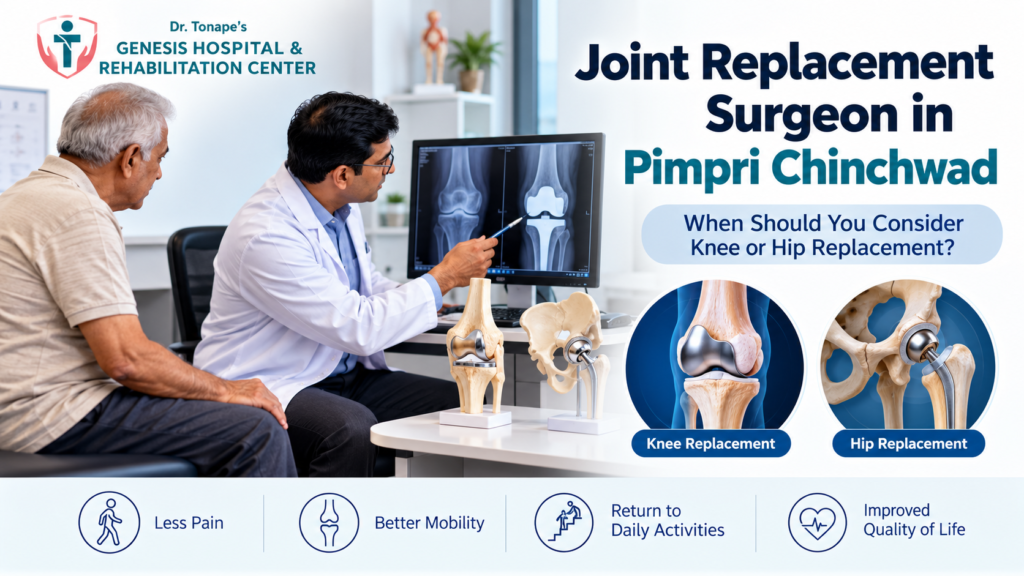
Joint Replacement Surgeon in Pimpri Chinchwad: When Should You Consider Knee or Hip Replacement?
Knee or hip pain can make everyday activities difficult. Climbing stairs, walking to the market, getting up from a chair or standing for long periods may become uncomfortable when a joint is damaged. If medicines, physiotherapy and other treatments are no longer providing enough relief, it may be time to discuss your options with an orthopaedic specialist.
If you are searching for a Joint Replacement Surgeon in Pimpri Chinchwad, it helps to understand when knee or hip replacement may be recommended and what to expect from treatment.
Dr. Tonape’s Genesis Hospital and Rehabilitation Centre in Pimpri-Chinchwad, Pune, provides orthopaedic services, including joint replacement. A consultation can help you understand the cause of your joint pain and whether surgery or another treatment is suitable for your condition.
Joint replacement is not necessary for everyone with knee or hip pain. The decision depends on the extent of joint damage, your symptoms, your ability to move comfortably and how well other treatments have worked.
What Is Joint Replacement Surgery?
Joint replacement surgery, also called arthroplasty, involves replacing damaged parts of a joint with artificial components. It is commonly performed on the knee and hip when severe arthritis or other joint conditions cause persistent pain and restricted movement.
The aim is to reduce pain, improve joint function and make everyday activities easier. Recovery varies depending on the procedure, your general health and your rehabilitation progress.
You can learn more about the procedure on the hospital’s Joint Replacement Service page.
When Should You Consider Knee or Hip Replacement?
Not every joint problem requires surgery. However, an orthopaedic consultation may be useful if you experience any of the following problems.
1. Persistent Knee or Hip Pain
Pain that continues for months and interferes with daily activities may indicate an underlying joint problem. If the pain persists despite appropriate treatment, an orthopaedic specialist can assess whether further treatment is needed.
2. Difficulty Walking or Climbing Stairs
Damaged knee or hip joints can make walking, climbing stairs and standing up from a chair increasingly difficult. You may also find it hard to walk distances that were previously manageable.
3. Stiffness and Restricted Movement
Joint stiffness may make it difficult to bend your knee, straighten your leg or move your hip comfortably. When movement becomes restricted, even routine activities can require extra effort.
4. Pain That Disturbs Sleep
Severe joint pain may continue even when you are resting. If knee or hip pain regularly interrupts your sleep, discuss it with an orthopaedic specialist.
5. Limited Relief From Other Treatments
Doctors may recommend medication, physiotherapy, activity changes or walking aids, depending on the condition. If these measures no longer provide enough relief and joint damage is advanced, replacement surgery may be considered.
A medical assessment is necessary before deciding whether surgery is appropriate.
What Conditions Can Lead to Joint Replacement?
Several conditions can damage the knee or hip joint. The most common include the following.
Osteoarthritis
Osteoarthritis develops when the protective cartilage within a joint gradually wears down. This can cause pain, stiffness and reduced movement. It commonly affects the knees and hips, particularly as people get older.
Rheumatoid Arthritis
Rheumatoid arthritis is an inflammatory condition that can damage joints over time. In advanced cases, joint replacement may be considered when pain and disability remain severe despite treatment.
Previous Joint Injury
A serious injury involving a joint can sometimes lead to long-term damage or arthritis. If the damage becomes severe, replacement surgery may be one of the available treatment options.
Advanced Joint Damage
Some joint conditions cause extensive damage to cartilage and surrounding structures. An orthopaedic surgeon can assess the severity and explain which treatments may be suitable.
Knee Replacement and Hip Replacement: What Is the Difference?
Both procedures replace damaged parts of a joint, but they involve different areas of the body.
Knee Replacement Surgery
Knee replacement may be recommended for people with severe knee arthritis or other forms of joint damage that cause persistent pain and restricted movement.
During the procedure, damaged joint surfaces are replaced with artificial components. The aim is to reduce pain and improve knee function.
Hip Replacement Surgery
Hip replacement may be considered when severe hip joint damage causes ongoing pain, stiffness and difficulty walking.
The damaged parts of the hip joint are replaced with artificial components. Rehabilitation after surgery helps patients work towards better strength, movement and mobility.
The choice between these procedures depends on the affected joint and the findings of your medical assessment.
How Does an Orthopaedic Surgeon Decide Whether You Need Joint Replacement?
A Joint Replacement Surgeon in Pimpri Chinchwad will review your symptoms, medical history and physical condition before recommending treatment.
The assessment may include:
- Discussing how long you have had pain and which activities make it worse.
- Checking joint movement, tenderness, strength and walking ability.
- Reviewing X-rays or other investigations when needed.
- Understanding which treatments you have already tried.
- Considering your general health, activity level and recovery needs.
Joint replacement is usually considered when joint damage is significant, symptoms affect quality of life and non-surgical treatments have not provided sufficient relief.
An X-ray showing arthritis does not automatically mean that you need surgery. Your symptoms and everyday limitations are also important when deciding on treatment.
Patients can learn more about the hospital’s Orthopaedic Services before arranging a consultation.
What Happens During Recovery After Joint Replacement?
Recovery takes time and varies according to the type of surgery, your general health and your progress after the operation.
Early Movement
Your healthcare team may help you begin moving and walking with assistance when it is safe to do so. The timing depends on your procedure and medical condition.
Physiotherapy and Rehabilitation
Exercises help improve strength, flexibility and movement after surgery. Your physiotherapist will guide you through the rehabilitation plan and explain which activities are appropriate at each stage.
Genesis Hospital provides physiotherapy and rehabilitation services. You can read more about physiotherapy care at Genesis Hospital.
Follow-Up Appointments
Follow-up visits allow your medical team to review healing, movement and any concerns during recovery.
Returning to Daily Activities
Many patients gradually return to everyday activities, but recovery is different for everyone. Follow your surgeon’s advice about walking, driving, work, exercise and other activities.
Can Joint Pain Be Managed Without Surgery?
Yes. Depending on the severity and cause of the problem, several non-surgical treatments may help manage joint pain.
These may include:
- Physiotherapy and strengthening exercises.
- Appropriate pain-relief medication recommended by a doctor.
- Weight management when excess weight places additional pressure on the joints.
- Changes to activities that aggravate pain.
- Walking aids when needed to improve support and mobility.
These treatments may be sufficient for some people. If joint damage is advanced and symptoms continue to limit daily activities, your doctor may discuss the benefits and risks of surgery.
Finding a Joint Replacement Surgeon in Pimpri Chinchwad
If knee or hip pain is affecting your daily routine, an orthopaedic consultation can help you understand the cause and available treatment options.
Dr. Tonape’s Genesis Hospital and Rehabilitation Centre is located at Renuka Avenue, Pimpri Colony, Pune. The hospital lists joint replacement among its orthopaedic services.
Patients searching for a Joint Replacement Surgeon in PCMC can explore the hospital’s Joint Replacement Service and read about Dr. Prashant Tonape, whose profile lists joint replacement among his specialisations.
If you need information about consultations or available treatment options, visit the Genesis Hospital Contact Page or call +91 95526 50900.
A consultation can help you understand whether knee replacement, hip replacement or another treatment is appropriate for your condition.
Frequently Asked Questions
1. When should I consult a joint replacement surgeon?
Consider an appointment if persistent knee or hip pain affects walking, sleep or daily activities, particularly when other treatments have not provided enough relief.
2. Is knee replacement necessary for every person with arthritis?
No. Many people manage arthritis with exercise, physiotherapy, medication and lifestyle changes. Knee replacement may be considered when joint damage is advanced and symptoms remain severe.
3. How long does recovery after joint replacement take?
Recovery varies depending on the procedure, your general health and your rehabilitation progress. Your surgeon and physiotherapist can provide guidance based on your individual condition.
4. Can physiotherapy help delay joint replacement?
Physiotherapy may improve muscle strength, joint movement and everyday function. Whether it can help avoid or delay surgery depends on the extent of joint damage and your symptoms.
5. Where can I enquire about joint replacement in Pimpri Chinchwad?
You can contact Dr. Tonape’s Genesis Hospital and Rehabilitation Centre in Pimpri-Chinchwad, Pune, to enquire about orthopaedic consultations and joint replacement services.
6. What should I ask an orthopaedic surgeon before joint replacement?
Ask about the benefits and risks of surgery, non-surgical alternatives, the expected recovery period, rehabilitation requirements and how the procedure may affect your daily activities.
Conclusion
Persistent knee or hip pain can affect how comfortably you walk, work and manage everyday tasks. When joint damage becomes severe and other treatments no longer provide enough relief, joint replacement may be worth discussing with an orthopaedic specialist.
If you are looking for a Joint Replacement Surgeon in Pimpri Chinchwad, arrange a consultation to understand the cause of your symptoms and whether surgery or another treatment is appropriate.
Dr. Tonape’s Genesis Hospital and Rehabilitation Centre in Pimpri-Chinchwad, Pune, offers orthopaedic services, including joint replacement. Visit the Joint Replacement Service page or contact the hospital for appointment enquiries.
Medical disclaimer: This article is for general educational purposes and does not replace a medical consultation, diagnosis or treatment plan from a qualified healthcare professional.